
PRP for Under-Eye Rejuvenation: Dark Circles, Hollows, and Fine Lines
- Apr 27, 2026
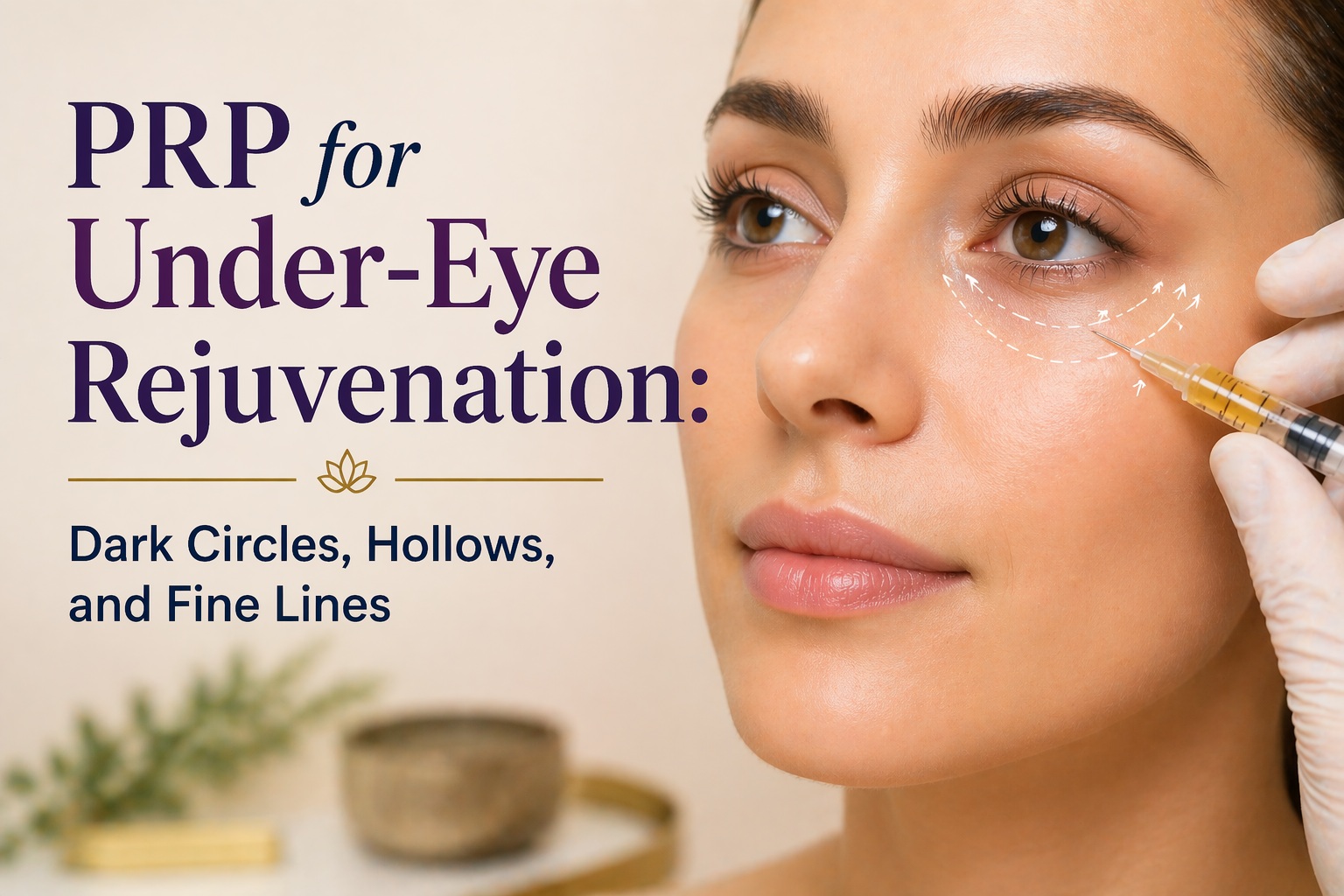 The skin beneath the eyes is often the first to display signs of ageing and tiredness. Dark circles, hollows, and fine lines can make the face appear tired even when one is well-rested. Platelet-rich plasma (PRP) has emerged as a targeted, minimally invasive option for rejuvenating this delicate region, particularly for individuals seeking natural, gradual improvement rather than immediate volumizing.
Why Under-Eye Skin Responds Well to PRP
The skin beneath the eyes is among the thinnest on the body, with fewer oil glands and less structural support. This makes it highly susceptible to:
- Collagen loss
- Dehydration
- Visible blood vessels
- Early wrinkling
PRP is especially effective here because it directly addresses the biological deficiencies contributing to these concerns. Some of the problems include:
Thin Skin and Collagen Deficit
As collagen levels decline, the under-eye area becomes more translucent, making underlying vessels more visible. PRP stimulates fibroblasts to produce new collagen, gradually thickening the dermis and improving skin resilience.
Vascular Component of Dark Circles -H3
Many dark circles are not purely pigmentation-related but are caused by poor microcirculation and visible capillaries. PRP promotes neovascularisation, the formation of new, healthier blood vessels, which improves oxygenation and reduces the bluish or purplish tint under the eyes.
Delicate Tissue Compatibility
Because PRP is derived from the patient’s own blood, it is highly biocompatible. This is particularly important in the under-eye region, where the risk of swelling, lumpiness, or adverse reactions must be minimised.
Pigmentation vs. Volume: What PRP Can and Cannot Do -H2
A critical aspect of patient selection is understanding the type of under-eye concern, as PRP does not address all issues equally.
What PRP Improves Well
- Fine lines and crepey skin through collagen regeneration
- Mild to moderate dark circles caused by thin skin or vascular visibility
- Skin texture and hydration, leading to a fresher appearance
Where PRP Has Limitations
- Deep tear trough hollows caused by structural volume loss
- Genetic hyperpigmentation (brownish discolouration)
- Significant fat loss or orbital shadowing
In such cases, PRP may still be beneficial as an adjunct treatment but is unlikely to deliver dramatic standalone results.
Read more: Which Is Better for Pigmentation Removal - PRP or Microneedling?
PRP vs. Fillers for Tear Troughs
One of the most common clinical decisions is whether to use PRP or hyaluronic acid fillers for under-eye concerns. The choice depends on the underlying issue and patient preference.
PRP - Regenerative Approach
- Works by improving skin quality over time
- No risk of overfilling or unnatural appearance
- Suitable for early ageing and mild hollows
- Results are gradual and subtle
Fillers - Structural Correction
- Provide immediate volume to fill hollows
- Ideal for deep tear trough deformities
- Results visible instantly
- Require a precise technique to avoid complications like puffiness or migration
When to Choose Which
- Choose PRP if the concern is skin quality, mild dark circles, or early fine lines.
- Choose fillers if the primary issue is volume loss and shadowing.
- Combination approach: Increasingly common, fillers restore structure, and PRP improves skin quality.
This combined strategy often delivers the most balanced and natural-looking results.
Number of Sessions Required
PRP is not a one-time treatment. Its effectiveness lies in the cumulative stimulation of collagen and tissue repair.
- Initial course: 2–3 sessions
- Interval: 4–6 weeks between sessions
- Maintenance: Every 6–9 months, depending on individual response
Some patients, particularly those with more pronounced concerns, may require additional sessions for optimal improvement.
Expected Outcomes and Timeline
PRP does not produce an instant transformation, which is both its strength and limitation.
Short-Term (1–2 Weeks)
- Mild improvement in hydration and glow
- Reduction in dullness
Medium-Term (4–8 Weeks)
- Noticeable improvement in skin texture
- Softening of fine lines
- Subtle reduction in dark circles
Long-Term (2–3 Months and Beyond)
- Increased dermal thickness
- Better skin elasticity
- More refreshed and less tired appearance
Results are typically natural and progressive, making PRP ideal for patients who prefer understated rejuvenation.
Final Perspective
PRP for under-eye rejuvenation is best understood as a skin-quality treatment rather than a volumizing solution. It works by enhancing the biology of the skin, improving collagen, circulation, and overall tissue health.
Choosing a good aesthetic doctor is key, as accurate diagnosis and technique make a significant difference in outcomes. A thorough assessment of the underlying cause, whether pigmentation, vascular visibility, or volume loss, is essential to selecting the right treatment strategy and achieving optimal, natural-looking results.
Frequently Asked Questions
1. Does PRP really work for under-eye dark circles?
Yes, especially when dark circles are caused by thin skin or visible blood vessels. PRP improves circulation and collagen, which gradually reduces the bluish or dull appearance under the eyes.
2. Is PRP better than fillers for under-eye hollows?
It depends on the concern. PRP improves skin quality and mild hollows over time, while fillers are better for deeper tear troughs that need immediate volume correction.
3. How many PRP sessions are needed for under-eye treatment?
Most patients need 2 to 3 sessions spaced 4 to 6 weeks apart. Maintenance sessions every few months help sustain results, especially for ongoing ageing changes.
4. When will I see results after PRP under-eye treatment?
Initial improvement in hydration can appear within 1 to 2 weeks. Visible changes in texture and fine lines usually develop over 4 to 8 weeks, with continued improvement over a few months.
5. What under-eye concerns does PRP not treat well?
PRP has limited effect on deep hollows caused by volume loss and genetic pigmentation. In such cases, combination treatments like fillers may be recommended.
6. Is PRP safe for the delicate under-eye area?
Yes. Since PRP is derived from your own blood, it is highly compatible with the body. This reduces the risk of adverse reactions when performed by a qualified practitioner.