
Understanding Melasma: Causes, Triggers, and Evidence-Based Treatment Approaches
- May 26, 2026
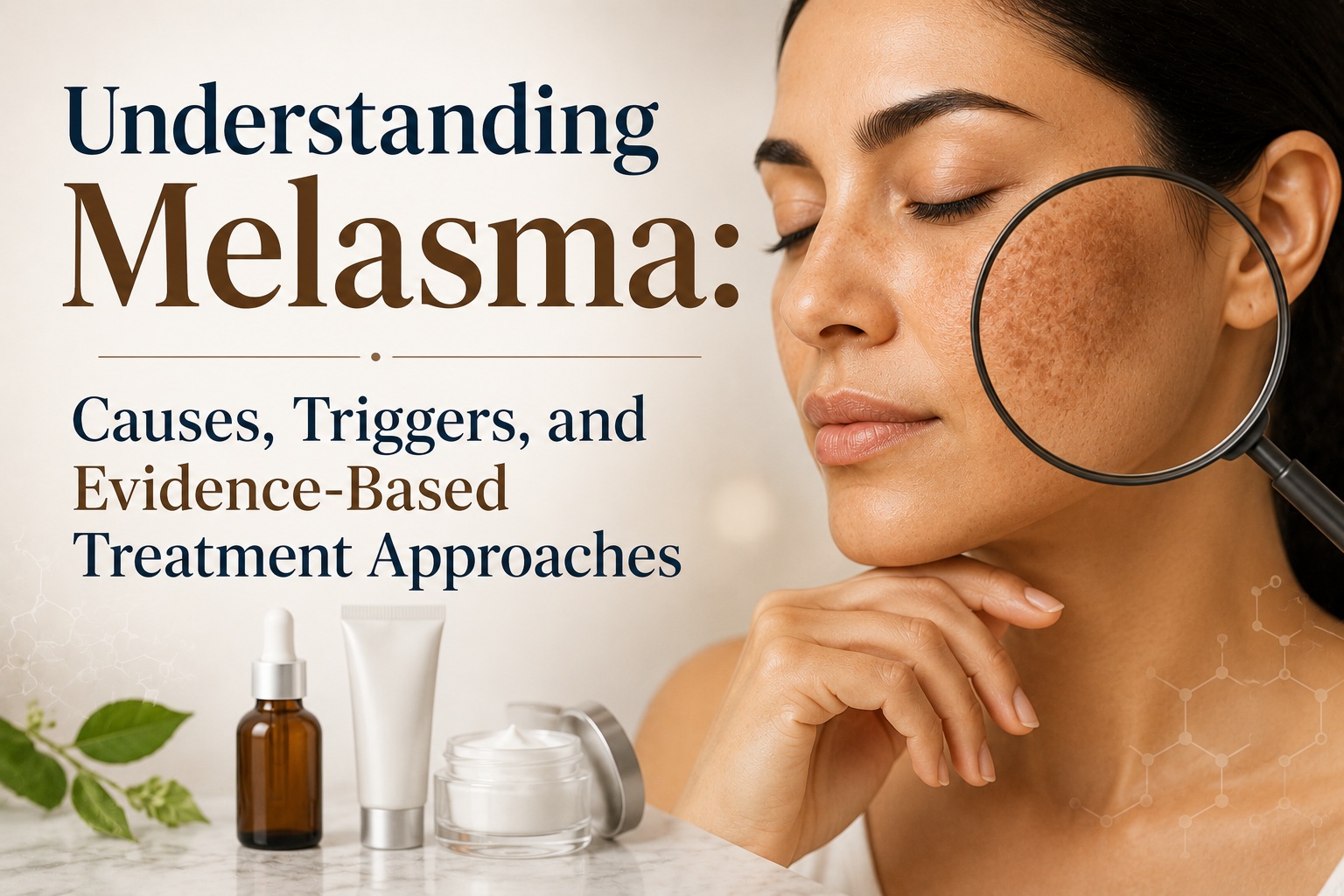 Melasma is a common skin condition that causes brown, gray-brown, or blue-gray patches to appear on the sun-exposed areas of the skin, especially the cheeks, forehead, upper lip, chin, and jawline. Unlike freckles or age spots, melasma appears as larger, symmetrical patches of discoloration. It most commonly affects women and individuals with medium to darker skin tones, though anyone can develop it.
Types of Melasma
Melasma is classified by both location and depth of pigmentation.
Location-based types include:
- Centro facial melasma: Affects the forehead, cheeks, nose, and chin; the most common pattern
- Malar melasma: Concentrated on the cheeks and cheekbones
- Mandibular melasma: Appears along the jawline
Depth-based classifications include:
- Epidermal melasma: Pigmentation in the outer skin layer; responds best to treatment
- Dermal melasma: Deeper blue-gray pigmentation that is harder to treat
- Mixed melasma: A combination of both
Some patients also develop recalcitrant melasma, a more stubborn form resistant to standard treatments.
What Causes Melasma?
Melasma develops when melanocytes, the skin’s pigment-producing cells, create excess melanin. Several factors can trigger or worsen this process.
- Hormonal changes
- Sun exposure
- Genetic predisposition
- Darker skin tones (Fitzpatrick III–VI)
- Thyroid disorders
- Heat exposure
- Irritating or photosensitizing skincare products
- Certain medications
Also Read: How to Prevent Worsening of Melasma During Pregnancy?
Why Melasma Is Difficult to Treat
Melasma has no permanent cure and often behaves as a chronic, recurring condition. Its persistence is due to:
- Multiple overlapping triggers
- Deep dermal pigmentation
- High sensitivity to sunlight and heat
- Recurrence after hormonal changes or sun exposure
However, significant improvement is achievable with the right long-term management plan.
Evidence-Based Treatment Approaches
Strict Sun Protection:
- Broad-spectrum SPF 50+ sunscreen
- Zinc oxide or titanium dioxide formulations
- Hats, shades, and UV-protective clothing
- Avoiding peak sun exposure
Topical Treatments
- Hydroquinone
- Triple-combination creams
- Azelaic acid, kojic acid, vitamin C, niacinamide, and tranexamic acid
Advanced Laser Technology
- Modern laser systems can safely and effectively treat melasma, including in darker skin tones, with lower risk of post-inflammatory hyperpigmentation.
- Newer technologies selectively target excess pigment while preserving surrounding healthy skin for more controlled results.
- Most patients undergo 8–10 sessions and may see approximately 75–80% improvement when combined with proper skincare and sun protection.
Long-Term Management
Successful melasma treatment usually requires a long-term, consistent approach that combines daily sun protection, ongoing topical maintenance therapy, and laser sessions when appropriate. With proper care and an individualized treatment plan, most people can significantly improve melasma and regain confidence in their skin.
Frequently Asked Questions
1. What is melasma and how does it look on the skin?
Melasma appears as symmetrical brown, gray-brown, or blue-gray patches, usually on the cheeks, forehead, upper lip, or jawline. Unlike freckles, the patches are larger and more diffuse.
2. What triggers melasma to worsen?
Sun exposure is one of the biggest triggers, but hormones, heat, certain skincare products, medications, and genetic factors can also worsen melasma over time.
3. Can melasma go away permanently?
Melasma is usually a long-term condition and may recur even after improvement. However, consistent treatment and sun protection can significantly reduce pigmentation and help maintain clearer skin.
4. Which treatments are commonly used for melasma?
Treatment may include broad-spectrum sunscreen, topical creams like hydroquinone or azelaic acid, and advanced laser therapies designed to target excess pigmentation safely.
5. Is laser treatment safe for melasma in darker skin tones?
Modern laser technologies can safely treat melasma in many darker skin tones when performed by experienced professionals using appropriate settings and individualized treatment plans.
6. Why is sunscreen important for melasma management?
Melasma is highly sensitive to UV exposure and heat. Daily SPF 50+ sunscreen use helps prevent worsening pigmentation and supports the effectiveness of other treatments.