
Physician-Supervised Weight Loss: The Science Behind GLP-1 and Incretin Therapy
- May 21, 2026
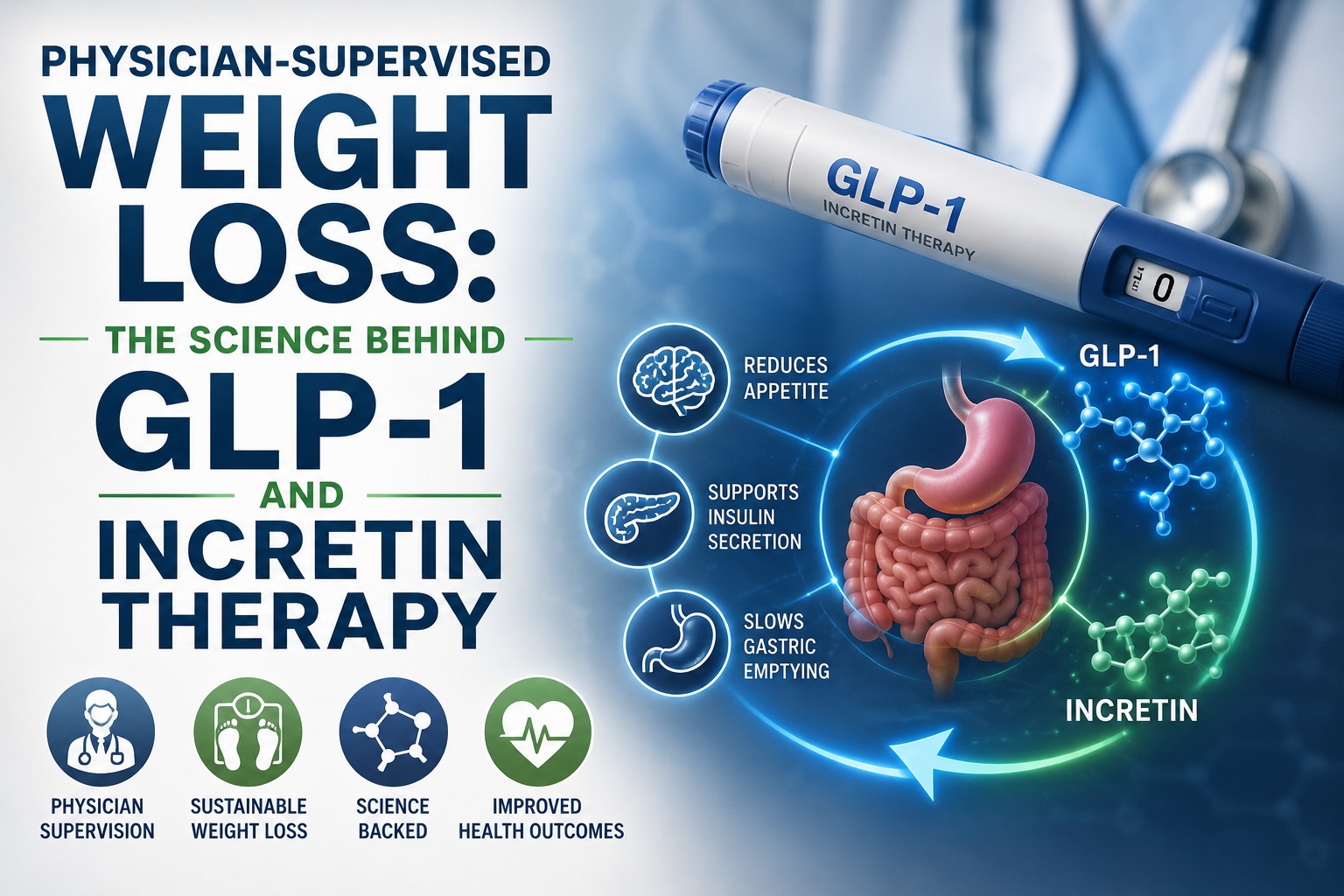 Losing weight can feel frustrating, especially when diet and exercise do not produce lasting results. Modern physician-supervised weight loss programs now use advanced injectable medications to help regulate hunger, metabolism, and blood sugar more effectively.
Understanding Incretin Therapy
Your body naturally produces hormones called incretins that help control appetite, insulin release, and metabolism after eating. Two key incretin hormones are GLP-1 (glucagon-like peptide-1) and GIP (glucose-dependent insulinotropic polypeptide). In individuals with obesity or metabolic dysfunction, these signals may not function efficiently.
GLP-1 and dual incretin medications mimic these natural hormones, helping restore the body’s ability to regulate hunger and energy balance.
How GLP-1 and Incretin Medications Work
These medications are not traditional stimulants or appetite suppressants. Instead, they support weight loss through several biological pathways:
Appetite Regulation
- Reduce hunger and food cravings
- Help you feel full with smaller portions
- Keep you satisfied longer after meals
- Reduce constant thoughts about food
Metabolic Support
- Improve insulin sensitivity
- Support healthy blood sugar regulation
- Enhance fat metabolism
Digestive Effects
- Slow stomach emptying
- Allow nutrients to absorb gradually
- Increase feelings of fullness and satiety
The result is a more natural reduction in calorie intake because hunger itself decreases, making long-term lifestyle changes easier to maintain.
Why Physician Supervision Matters
Medical oversight is essential to ensure safety, effectiveness, and individualized care.
Before starting treatment, physicians perform a comprehensive evaluation that may include:
- Reviewing medical history and medications
- Assessing metabolic health through lab testing
- Screening for conditions that may make treatment unsuitable
- Determining the appropriate medication and starting dose
- Ongoing monitoring is equally important. Regular follow-ups help track:
- Weight and body measurements
- Blood sugar, cholesterol, and liver function
- Medication tolerance and side-effects
- Dose adjustments and lifestyle progress
Also Read: How Do MIC Weight Loss Injections Work?
A Complete Weight Loss Approach
Medication works best when combined with comprehensive lifestyle support. Effective physician-supervised programs often include:
- Nutritional guidance for sustainable eating habits
- Physical activity recommendations suited to your fitness level
- Behavioral coaching to address emotional and habitual eating
- Sleep optimization to support metabolism and hormone balance
- Long-term maintenance planning for lasting results
Who May Benefit
Medical weight loss therapy may help individuals who:
- Struggle with obesity or excess weight
- Have not achieved lasting success with diet and exercise
- Experience insulin resistance or metabolic syndrome
- Want a non-surgical weight loss option
- Prefer physician-guided care and monitoring
If you have struggled to lose weight despite consistent effort, physician-supervised GLP-1 or dual incretin therapy may offer a scientifically supported path toward sustainable, long-term results.
Frequently Asked Questions
1. What is GLP-1 therapy for weight loss?
GLP-1 therapy uses medications that mimic natural hormones involved in appetite and blood sugar regulation. These treatments help reduce hunger, improve fullness, and support long-term weight management.
2. How do incretin medications help with weight loss?
Incretin medications help regulate hunger signals, slow stomach emptying, improve insulin sensitivity, and reduce food cravings, making it easier to maintain a calorie deficit naturally.
3. Why is physician supervision important during GLP-1 treatment?
Physician supervision helps ensure safe dosing, monitors side effects, tracks metabolic health, and adjusts treatment plans based on individual progress and medical history.
4. Who may benefit from GLP-1 or incretin therapy?
These treatments may help individuals struggling with obesity, excess weight, insulin resistance, metabolic syndrome, or those who have not achieved lasting results through diet and exercise alone.
5. Are GLP-1 medications a replacement for diet and exercise?
No. These medications work best when combined with nutritional guidance, physical activity, behavioral support, and long-term lifestyle changes.
6. How long does it take to see results with GLP-1 therapy?
Results vary depending on the individual, treatment plan, and lifestyle habits. Many patients begin noticing appetite changes and gradual weight loss over several weeks with ongoing physician monitoring.