
What are Laser and Light-Based Melasma Treatments and How They Target Pigmentation?
- Jun 24, 2026
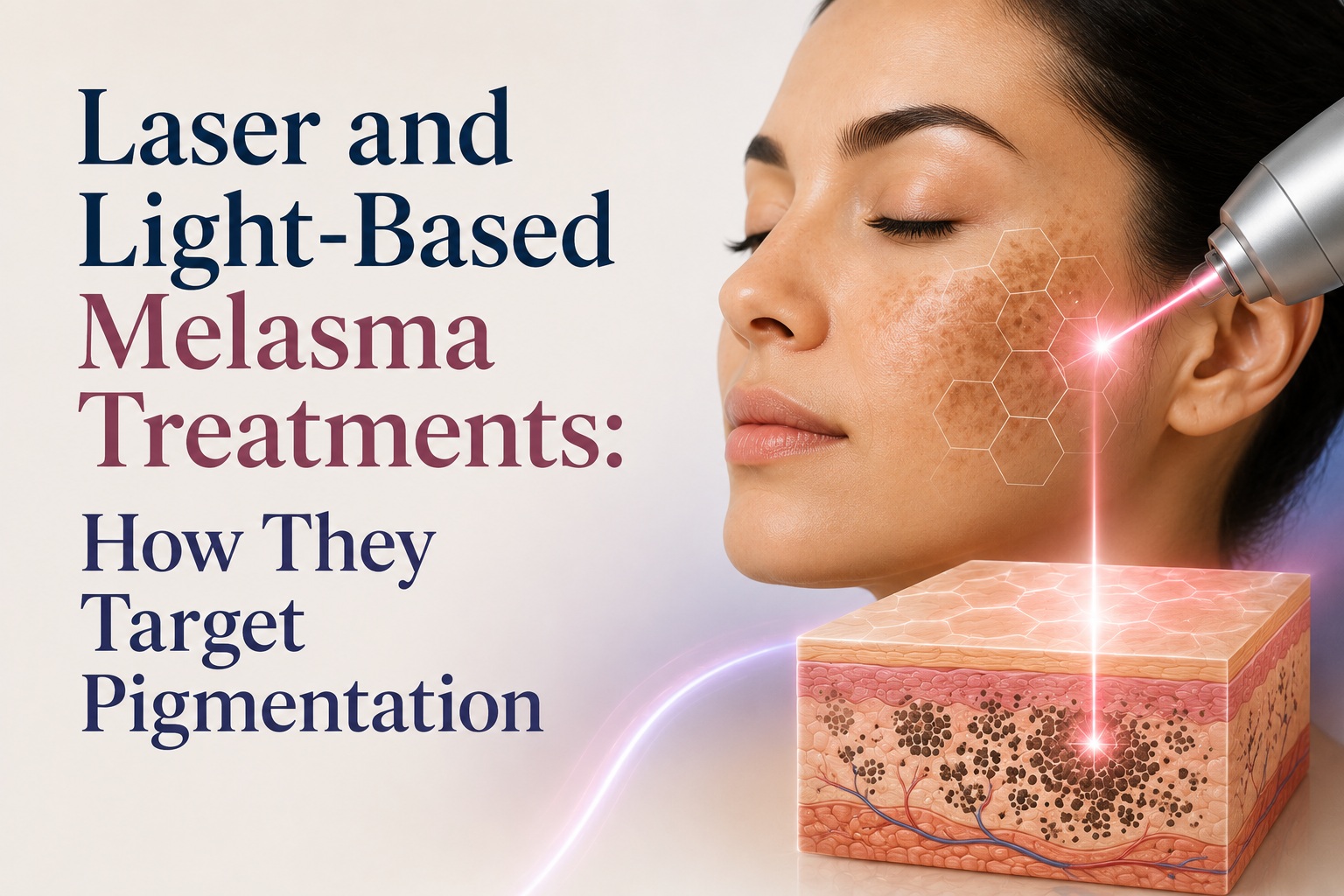 If you have noticed stubborn brown or gray patches on your cheeks, forehead, upper lip, or chin, you may be experiencing melasma, a common but stubborn skin condition. Unlike temporary discoloration, melasma is a long-term skin concern that may not respond well to creams or fade over time. Fortunately, advanced laser and light-based treatments are now making it possible to reduce melasma safely and without surgery.
What Is Melasma?
Melasma is a form of hyperpigmentation, causes by an overproduction of melanin (the pigment that gives skin its color).It may be triggered by sun exposure, hormonal changes, pregnancy, or the use of birth control medication. It comes in different forms depending on where the pigment sits:
Type | Where Pigment Is Located | Appearance | Common In |
Epidermal | Outer skin layer | Well-defined, darker brown | All skin tones |
Dermal | Deeper skin layer | Blurrier edges, blue-gray tone | All skin tones |
Mixed | Both layers | A combination of the above | All skin tones |
Inapparent | Deeper or both layers but difficult to detect | Hard to see with the naked eye | Darker skin tones |
Advanced Laser Technology for Melasma
The latest generation of laser and light-based technologies is designed to treat melasmaprecisely and effectively. Here is why they are more effective:
- Modern lasers are calibrated to target melanin-producing cells without damaging surrounding tissue.
- Gentler, more precise energy pulses minimize inflammation.
- Newer protocols are designed to work safely on a wider range of skin types.
- A structured course of treatment builds progressive, visible improvement over time.
After 8 to 10 sessions, patients typically see a 75 to 80% improvement in their melasma. Results vary from person to person, which is why a personalized treatment plan matters.
Also Read: Understanding Melasma: Causes, Triggers, and Evidence-Based Treatment Approaches
What to Expect from Treatment
Laser and light-based melasma treatmentsare non-surgical, outpatient procedures with no significant downtime. A complete treatment plan typically includes:
- An initial consultation to assess melasma type and skin tone.
- A series of 8 to 10 laser sessions.
- Ongoing sun protection guidance, since sun exposure is a primary trigger for recurrence.
- Possible combination with topical treatments for enhanced results.
Who Is a Good Candidate?
Laser treatment may be appropriate if you:
- Have persistent melasma that has not responded to topical treatments.
- Are not currently pregnant or on hormonal therapy that is actively worsening the condition.
- Are committed to consistent sun protection as part of your routine.
- Want a medically supervised, evidence-based approach.
A Safe and Effective Solution -H2
Melasma is a complex condition, but advanced laser and light-based treatments offer a safe and effective path to meaningful improvement. A physician-led consultation is the best first step to finding the right plan for your skin.
Frequently Asked Questions About Laser Melasma Treatment
1. Can laser treatment help reduce melasma?
Yes. Modern laser and light-based treatments are designed to target excess pigment while minimizing damage to surrounding skin. Many patients experience significant improvement after completing a recommended treatment plan.
2. How many laser sessions are usually needed for melasma?
Most patients require a series of 8 to 10 sessions for optimal results. Improvement is typically gradual, with pigmentation fading progressively throughout the treatment course.
3. Is laser treatment suitable for all types of melasma?
Laser treatment can be used for epidermal, dermal, and mixed melasma, but results may vary depending on how deeply the pigment is located. A professional assessment helps determine the most appropriate approach.
4. What results can I expect from laser melasma treatment?
Many patients see approximately 75% to 80% improvement after completing a full treatment series. Results vary based on skin type, melasma severity, and adherence to sun protection recommendations.
5. Who is a good candidate for laser melasma treatment?
Individuals with persistent melasma that has not responded to topical treatments may benefit. Candidates should also be committed to ongoing sun protection and follow a physician-guided treatment plan.
6. Can melasma return after laser treatment?
Yes. Melasma can recur, especially with ongoing sun exposure or hormonal triggers. Consistent sunscreen use and maintenance care are important for preserving results.