
Choosing the Right Filler for Your Facial Concern
- Oct 27, 2026
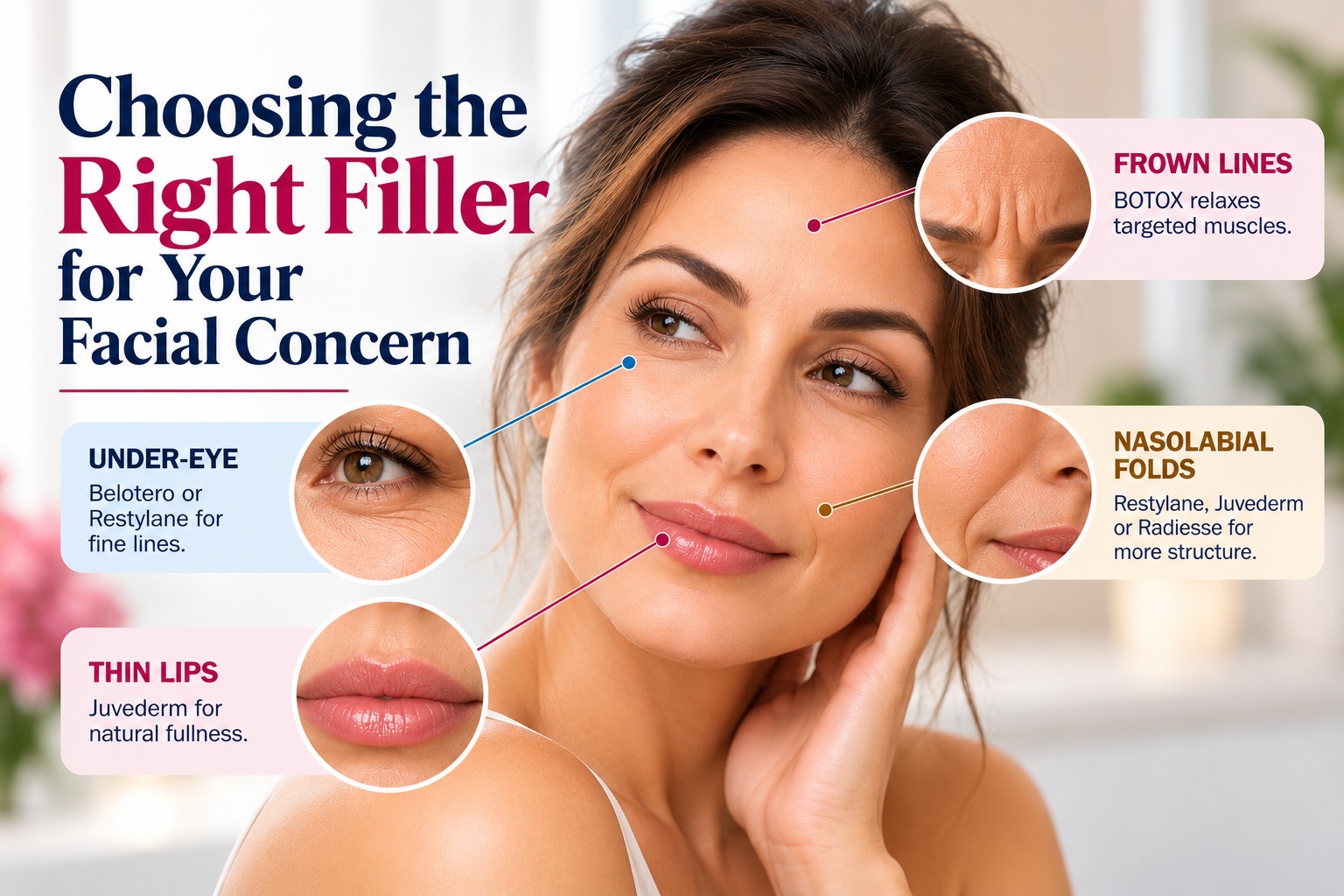 Aging can catch you unawares. Suddenly, you glance in the mirror and notice a crease that wasn't there a few years ago. Maybe your cheeks look a little flatter. Maybe your lips seem thinner. Each change has a different cause, and each calls for a different filler solution.
But how do you decide which filler to choose? There is no single best filler. There's only the best filler for your concern. Let’s look at how to choose the right filler for your facial concern.
Moving Lines vs. Resting Lines
Before choosing a product, it helps to know what kind of line you're dealing with. Dynamic lines appear only when you make an expression. Static lines and folds stay put even when your face is relaxed.
This matters because the two respond to different treatments. BOTOX, which is not a dermal filler, relaxes the targeted muscles that cause dynamic lines to form during facial expressions. Dermal fillers, on the other hand, add volume to lift and smooth static lines and hollows.
Matching the Filler to Your Concern
Here's a simple way to think about it:
- Fine lines and light creases: A soft, smooth-blending filler like Belotero or Restylane.
- Deep folds from nose to mouth: Restylane, Juvederm, or Radiesse for more structure.
- Thin or undefined lips: Juvederm, which adds fullness while keeping a natural feel.
- Flat or sunken cheeks: Voluma or Radiesse to restore lift.
- Lines that deepen when you frown or squint: BOTOX, which relaxes targeted muscles to soften dynamic wrinkles, such as frown lines and crow's feet.
Also Read: How to Take Care of Your Face After Fillers?
Other Factors That Shape the Choice
Longevity is a big factor. Hyaluronic acid fillers such as Juvederm can last up to about a year, while Radiesse provides immediate volume and can stimulate collagen production over time. Your skin thickness, age, and lifestyle all play a role too.
In many cases, natural-looking results come from a personalized treatment plan rather than a single product. For example, BOTOX may help soften forehead lines, while a dermal filler can add volume to areas such as the nasolabial folds (the lines running from the nose to the corners of the mouth). A skilled injector assesses the face as a whole, rather than focusing on just one wrinkle.
What the Treatment Feels Like
Filler treatments are quick, in-office procedures. Discomfort is minimal, and an ice pack or local anaesthetic can help if your skin is sensitive. Mild swelling or bruising may appear but usually settles within days. Results vary from person to person.
Ready to Find Your Perfect Match?
If you're not sure which filler fits your concern, that's exactly what a consultation is for. Dr. Rani V. Ramachandran, M.D., will look at your features, talk through your goals, and recommend a plan that keeps your results natural and refreshed.
Just give the team a call at (408) 761-5953 or drop a note to info@ranimd.com and they'll help you get started.
Frequently Asked Questions
1. Which dermal fillers are commonly used for nasolabial folds?
Hyaluronic acid fillers, including certain Restylane and Juvéderm products, may be used to soften nasolabial folds. The most suitable option depends on fold depth, facial anatomy, skin characteristics, and the desired result.
2. What is the difference between fillers for lips and fillers for cheeks?
Lip fillers are generally selected to enhance lip volume, shape, and definition while maintaining appropriate movement and proportion. Cheek fillers are chosen to restore midface volume or improve contour and support. Products and injection techniques differ according to the treatment area.
3. Can dermal fillers treat wrinkles caused by facial expressions?
Fillers may help with some lines that remain visible when the face is at rest, but they do not directly relax the muscles responsible for expression-related wrinkles. Treatments such as BOTOX may be considered for certain dynamic lines after an appropriate clinical assessment.
4. How long do dermal filler results typically last?
Longevity varies by product, treatment area, amount injected, and individual metabolism. Some hyaluronic acid fillers may last around six to twelve months or longer, while other products can have different durations. Your injector can explain the expected timeline for the specific product being considered.
5. Are dermal fillers and Radiesse the same type of treatment?
No. Many popular fillers, including Juvéderm and Restylane products, use hyaluronic acid. Radiesse contains calcium hydroxylapatite and provides immediate volume while also stimulating collagen production. Their properties, approved uses, and suitability differ.
6. What side effects should someone expect after facial filler injections?
Common temporary effects include swelling, redness, tenderness, and bruising. More serious complications, including accidental injection into a blood vessel, can occur. Seek immediate medical attention for severe or unusual pain, skin colour changes, or any vision changes after treatment.
7. How can someone choose the right facial filler in San Jose?
A qualified injector can assess facial anatomy, skin condition, medical history, and treatment goals before recommending a product. Patients considering facial fillers in San Jose can contact Rani MD to discuss suitable options, potential risks, and realistic expectations.