
Combination Therapy for Stubborn Melasma
- Aug 18, 2026
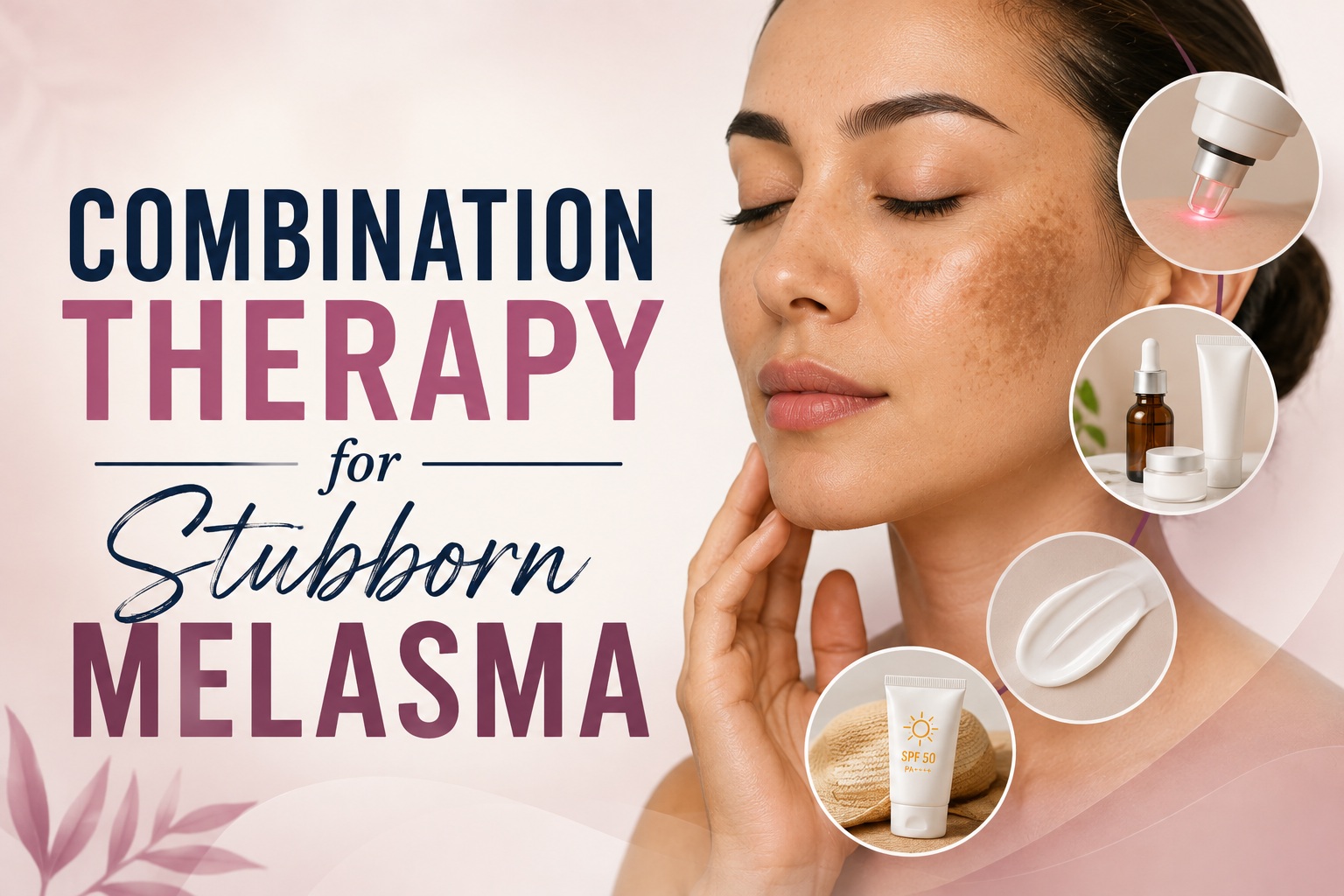 Some cases of melasma do not respond well to a single treatment approach. This is where combination therapy comes in, pairing laser or light-based treatment with supporting measures so that results are more complete and easier to maintain.
Why a Single Approach Often Falls Short
Melasma is a layered condition. Pigment can sit close to the skin's surface, deeper within it, or in both places at the same time, and its severity varies widely from person to person.
A more resistant form, often called recalcitrant melasma, does not respond to topical treatments alone. Relying on just one method, whether that is a cream or a single laser protocol, tends to leave some pigment behind and does little to prevent it from returning.
What Combination Therapy Involves
Rather than treating melasma with one tool, a combination plan brings together several modalities that each play a distinct role. This typically includes:
- Laser and light-based sessions
- Topical skincare
- Consistent daily sun protection
- A structured schedule of sessions
How the Modalities Work Together
The table below summarizes how each part of a combination approach contributes to overall progress.
Modality | Role in a Combination Plan |
Laser and light-based treatment | Targets pigment at the cellular level to break down excess melanin |
Topical skincare | Supports pigment control between sessions and helps maintain results |
Daily sun protection | Prevents new pigment from forming and protects against relapse |
Periodic touch-up sessions | Reinforces earlier progress and manages melasma as an ongoing condition |
Also Read: How Lifestyle Choices Affect Skin Pigmentation
Who Benefits Most from a Combination Approach
A combination plan tends to be most valuable for patients with:
- Melasma that has not improved with topical treatment alone
- Deeper or mixed pigmentation that is harder to reach with a single method
- A history of melasma returning after previous treatment
- A willingness to stay consistent with sun protection and follow-up care
What This Means for You
Pigmentation varies so much from person to person that the right mix of treatments depends on an individual assessment of skin type, pigment depth, and past response to treatment. A physician-led evaluation is the best starting point for building a plan that fits your skin.
Frequently Asked Questions About Combination Therapy for Melasma
1. Why does stubborn melasma sometimes need combination therapy?
Stubborn melasma may involve pigment at different depths and may not respond sufficiently to a single treatment. Combining laser or light-based treatment with skincare and consistent sun protection can address different aspects of melasma management.
2. What treatments are combined for stubborn melasma?
A combination plan may include laser or light-based sessions, topical skincare, daily sun protection, and periodic touch-up treatments. The specific combination depends on the individual's skin type, pigment depth, and previous response to treatment.
3. Can combination therapy help if topical melasma treatments have not worked?
Yes, combination therapy may be particularly useful when melasma has not improved with topical treatment alone. Laser or light-based treatment can be incorporated alongside skincare and sun protection as part of a more comprehensive plan.
4. How important is sunscreen during melasma treatment?
Daily sun protection is essential because UV exposure can encourage new pigmentation and contribute to melasma returning. Consistent protection helps preserve the progress achieved through professional treatments and skincare.
5. Does combination therapy permanently cure melasma?
No. Melasma currently has no permanent cure, and it can return even after successful treatment. A structured combination plan, ongoing skincare, sun protection, and appropriate follow-up can help achieve and maintain meaningful improvement.
6. How is the right combination treatment chosen for melasma?
The treatment plan should be individualized based on factors such as skin type, pigment depth, severity, and previous treatment response. A physician-led evaluation can help determine which combination is appropriate for the patient's skin.