
Understanding Laser Tattoo Removal and the Science of Fading Ink
- Sep 18, 2026
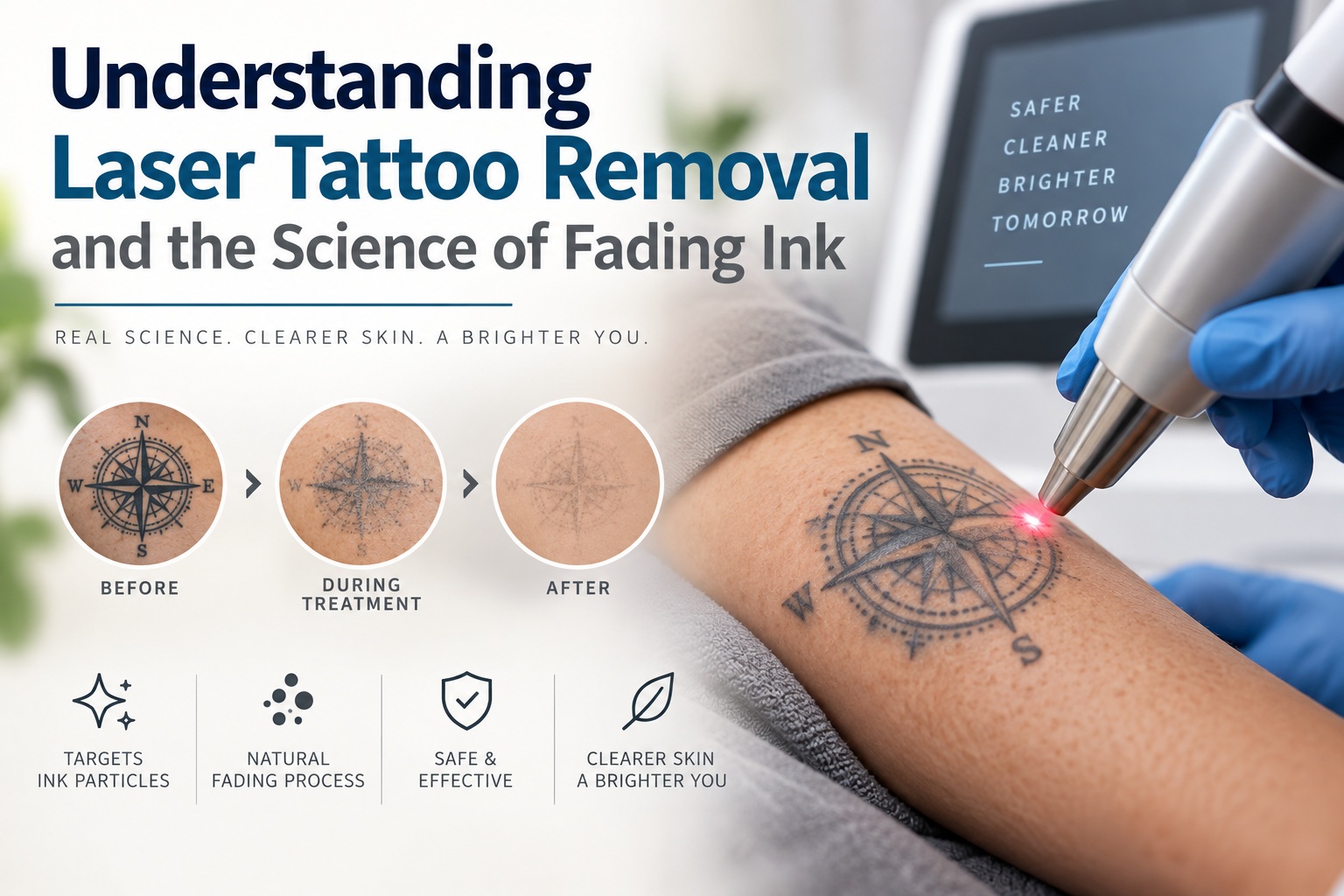 A tattoo is designed to be permanent, so it can feel like a big decision to have one removed or faded. For a long time, that decision came with real drawbacks. Older removal methods were painful, could leave scarring, and offered no guarantee that the ink would disappear completely.
Why Tattoo Ink Is So Difficult to Remove
Tattoo ink is not sitting on the surface of the skin the way a temporary marking does. It is deposited into the deeper layers of skin tissue, which is exactly what makes it long-lasting in the first place.
This depth is what made older removal techniques difficult and unpredictable. Reaching the ink without damaging the surrounding skin requires precision, and that precision is where modern laser technology has made the biggest difference.
How Laser Technology Breaks Down the Ink
Modern laser tattoo removal relies on a photoacoustic technology process that uses Q-switched Nd: YAG lasers to reach ink deep within the skin. Rather than using a single wavelength for every color, this approach uses four different wavelengths, each suited to breaking down a specific range of ink colors.
The laser energy travels through the skin and shatters the tattoo ink into fine microparticles. From there, the body's own lymphatic system gradually flushes those particles away, which is what produces the fading effect over the course of treatment.
Matching Colors to Session Counts
Not all ink colors respond to laser treatment at the same rate. Because pigments differ in how they absorb light, some colors clear up in relatively few sessions while others take considerably longer. The table below gives a general idea of what to expect.
Ink Color | Typical Number of Sessions |
Blue, black, red, purple, orange | Four to five sessions |
Green and sky-blue | Ten to fifteen sessions |
Note: Session estimates are general approximations. Actual removal times depend heavily on individual skin characteristics, tattoo age, and ink quality.
What Happens During a Session
- The procedure is non-surgical and does not require anaesthesia.
- A trained practitioner passes the laser directly over the tattoo, targeting the ink beneath the skin's surface.
- The treated area may turn temporarily white immediately after the laser passes over it.
- Most patients describe the sensation as a light sting, similar to a snapping rubber band, along with a warm feeling in the area.
- There is no significant downtime, and patients generally do not experience major discomfort.
Find Out if Laser Tattoo Removal Is Right for You
Curious whether your tattoo is a good fit for this kind of treatment? Rani V. Ramachandran, M.D. would love to help you figure it out. Give us a call at (408) 761-5953 or email us at mailto:info@RaniMD.com, and let's chat about what your ink needs.
Frequently Asked Questions
1. How does laser tattoo removal work?
Laser tattoo removal uses focused laser energy to break tattoo ink into tiny particles, which are then gradually cleared by the body's natural processes.
2. How many sessions does laser tattoo removal take?
The number of sessions varies by tattoo colour, ink type, tattoo age, skin characteristics, and other factors. Some colours may respond in four to five sessions, while others can require more.
3. Does laser tattoo removal completely remove a tattoo?
Laser treatment can significantly fade tattoo ink, but complete removal is not guaranteed. Results vary depending on the tattoo and individual skin characteristics.
4. Why are some tattoo colours harder to remove than others?
Different pigments absorb laser energy differently. Colours such as green and sky-blue can be more resistant and may require more treatment sessions.
5. Is laser tattoo removal painful?
Most people describe the sensation as a light snapping or stinging feeling, similar to a rubber band, along with warmth in the treated area.
6. Is laser tattoo removal safe for my skin?
Laser tattoo removal is a non-surgical procedure that targets tattoo pigment beneath the skin. A qualified practitioner can assess your tattoo and skin characteristics to determine whether the treatment is appropriate for you.